Meme Coins: Halal or Haram? Shariah Concerns, Solana Meme Coins and How to Check
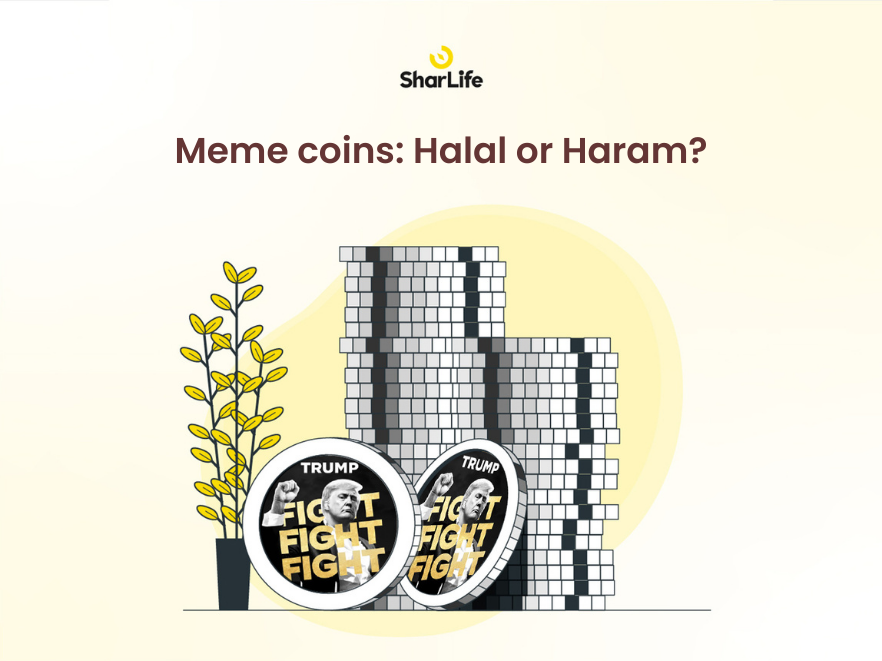
Meme coins have taken the crypto world by storm, attracting investors with their hype-driven price surges and community-driven appeal. Bitcoin and Ethereum are built on strong technological foundations. Meme coins, by contrast, often rely on internet culture, social media trends and speculative trading. Platforms like Pump.fun have made it easier than ever to launch meme coins, leading to a flood of new tokens in the market. Even the President of the United States has introduced his own meme coin, $TRUMP, fuelling further interest.
This rapid expansion has raised an important question among Muslim investors: are meme coins Shariah-compliant? This article explains the nature of meme coins and their compatibility with Islamic financial principles. It covers the main reasons meme coins raise Shariah concerns, what to know about the fast-growing Solana meme coin scene, and how to check a specific coin's status on our crypto Shariah screener.
What are meme coins?
Meme coins are cryptocurrencies inspired by internet memes, jokes or viral trends. Utility-driven tokens serve specific functions in blockchain ecosystems. Meme coins, however, are often created as a form of entertainment, community engagement or social experimentation.
- Community-driven: The value of meme coins depends largely on social media trends and online communities rather than technological innovation.
- High volatility: Meme coins experience extreme price swings, often driven by celebrity endorsements and speculative trading.
- Cultural symbolism: Many meme coins represent internet subcultures. For example, Dogecoin (DOGE) is based on the popular "Doge" meme.
- Supply dynamics: Most meme coins have extremely high circulating supplies. This makes them accessible to a broad audience but raises concerns about long-term value.
The Shariah perspective on meme coins
Meme coins pose risks that contradict Shariah principles because they lack clear utility and genuine use. In Shariah, only assets with genuine benefit and utility can be traded. According to the Shafi'i school, Imam Ibn Roslan (may Allah have mercy on him) outlined key conditions for a valid transaction in Matan Az-Zubad:
- The asset must be pure.
- The asset must be beneficial.
- The asset must be deliverable.
- The asset must be owned by those involved in the transaction.
- The asset must have been seen.
One of the most crucial conditions is benefit (manfa'ah): an asset must serve a productive purpose. Mufti Faraz Adam (Chief Shariah Officer, Amanah Advisors) explains that an asset complies with Shariah if it has utility and its benefits are Halal. If it lacks utility or offers non-Halal benefits, it contradicts Shariah principles.
Since meme coins generally lack clear utility, they raise Shariah concerns and are best avoided. Shariah also does not recognise assets without reasonable utility as valid for trade. This prevents exploitation and protects consumers from deceptive sales. Ultimately, Shariah aims to promote what is beneficial and prevent harm.
How meme coins are assessed from a Shariah angle
When looking at any meme coin, the conditions above become practical questions. These questions help you understand why a coin may or may not be suitable. They do not replace the status shown on our screener.
- Is there real benefit? Does the token do anything beyond being traded, such as powering a working product or service? Is that benefit itself Halal?
- Is the project clear and legitimate? Are the team, the purpose and the token details disclosed, or is the project anonymous and vague?
- Is the theme or activity permissible? A coin linked to impermissible content or activities fails the requirement that its benefits be Halal.
- Is the value driven mainly by hype? If price depends almost entirely on staying popular, the coin leans heavily towards speculation.
Common reasons meme coins raise Shariah concerns
A meme coin may not receive a compliant status on a Shariah screener for several recurring reasons. These follow directly from the principles and risks described in this article:
- No clear utility: The coin exists mainly as a joke, a trend or a collectible, with no productive purpose. This fails the condition of benefit (manfa'ah).
- Excessive speculation: Returns depend on hype, celebrity mentions and trading momentum rather than any underlying value.
- Unclear project details: Anonymous teams, missing documentation and questionable organisations make it hard to know what is actually being bought.
- Links to pump-and-dump or fraud: Some meme coins have been linked to pump-and-dump schemes. In some cases they may even constitute fraud or Ponzi schemes.
- Absence of regulatory oversight: Little protection exists if a project disappears or its creators sell out.
For the actual status of a particular coin, always rely on the result shown on our crypto Shariah screener rather than on general reasoning alone.
Solana meme coins: what Muslim investors should know
Many of today's new meme coins are launched on the Solana blockchain. Launchpads such as Pump.fun let almost anyone create a token in minutes, with little or no technical knowledge. Transaction costs on Solana are generally low, so launching and trading these tokens is cheap and fast. This has led to a very large number of new tokens appearing in a short time.
For Muslim investors, this raises the same questions as any other meme coin, often in a stronger form:
- Utility is usually absent. Most quickly launched tokens are created to ride a trend, not to provide a product or service.
- Information is limited. Many tokens have anonymous creators and little or no documentation, which makes them hard to assess.
- Risk of manipulation is high. Early buyers or creators may sell large holdings once the price rises, leaving later buyers with heavy losses.
- Liquidity can vanish. A token that trends today may have few buyers tomorrow, so selling can become difficult.
Being on Solana does not make a coin more or less Shariah-compliant in itself. The blockchain is only the platform. What matters is the token's purpose, benefit and the way it is traded. Check any Solana meme coin on our crypto Shariah screener before making a decision.
Risks of investing in meme coins
Investing in meme coins carries significant risks. Many lack legitimacy and have unclear project details, questionable organisations and no regulatory oversight. Many also lack genuinely useful blockchain applications.
Since meme coins rely on trends, their price movements depend on staying relevant and popular. They are often linked to pump-and-dump schemes, which increases market risk. In some cases, they may even constitute fraud or Ponzi schemes.
A key fiqhi principle states:
دَرْءُ الْمَفَاسِدِ أَوْلَى مِنْ جَلْبِ الْمَصَالِحِ
"Preventing harm takes precedence over acquiring benefits."
Meme coins offer potential profits, but they also carry a high risk of substantial losses. Some investors have made millions on paper but struggled to sell their holdings because demand was low. Meme coin investments therefore remain highly speculative and should be approached with caution.
Looking for a halal meme coins list?
Our crypto Shariah screener shows the current status of the coins we have screened. This includes well-known meme coins such as Dogecoin (DOGE) and $TRUMP. Statuses can change as projects and information change, so we do not repeat them here. Search for the coin by name or ticker on the screener to see its latest status.
Before buying any meme coin, follow these steps:
- Search for the coin on the crypto Shariah screener.
- If the coin is not listed, or is not shown as compliant, treat it with caution in line with the concerns above.
- Ask whether the coin has real, Halal utility or exists only for speculation.
- Only commit money you can afford to lose, given the extreme volatility.
Conclusion
Meme coins present significant concerns from both a Shariah compliance and a legitimacy standpoint. Because of their high risks and lack of clear utility, we strongly discourage investing in them. This applies equally to the flood of new Solana meme coins. Muslim investors should instead prioritise ethical, productive and sustainable assets that align with Islamic principles and contribute to real economic value.
Check the Shariah status of your cryptocurrency here.
